
FISH4ACP supports the Marshall Islands in upgrading its tuna value chain programme leaves a legacy of improved infrastructure, better trained workers and a platform to continue its work
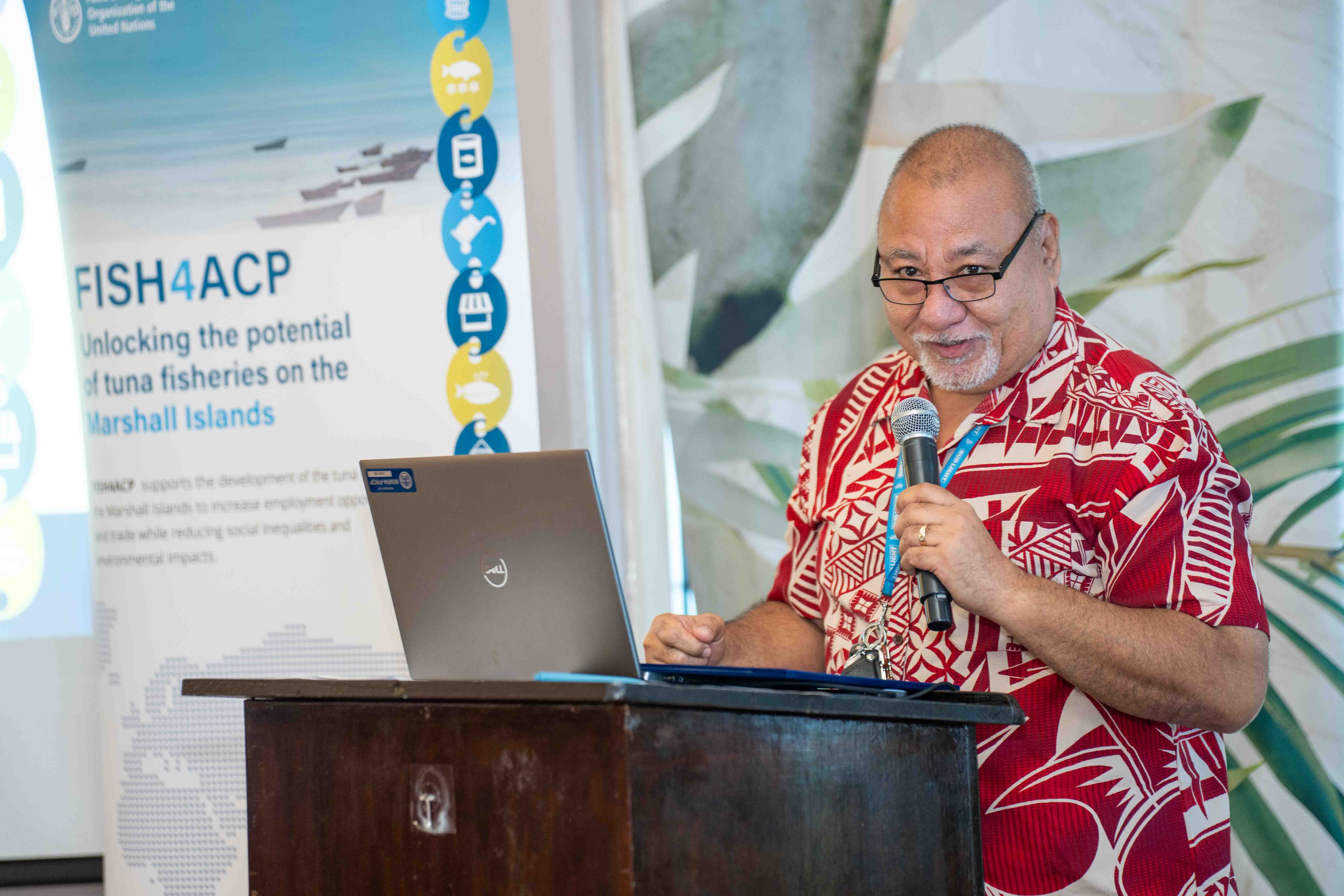
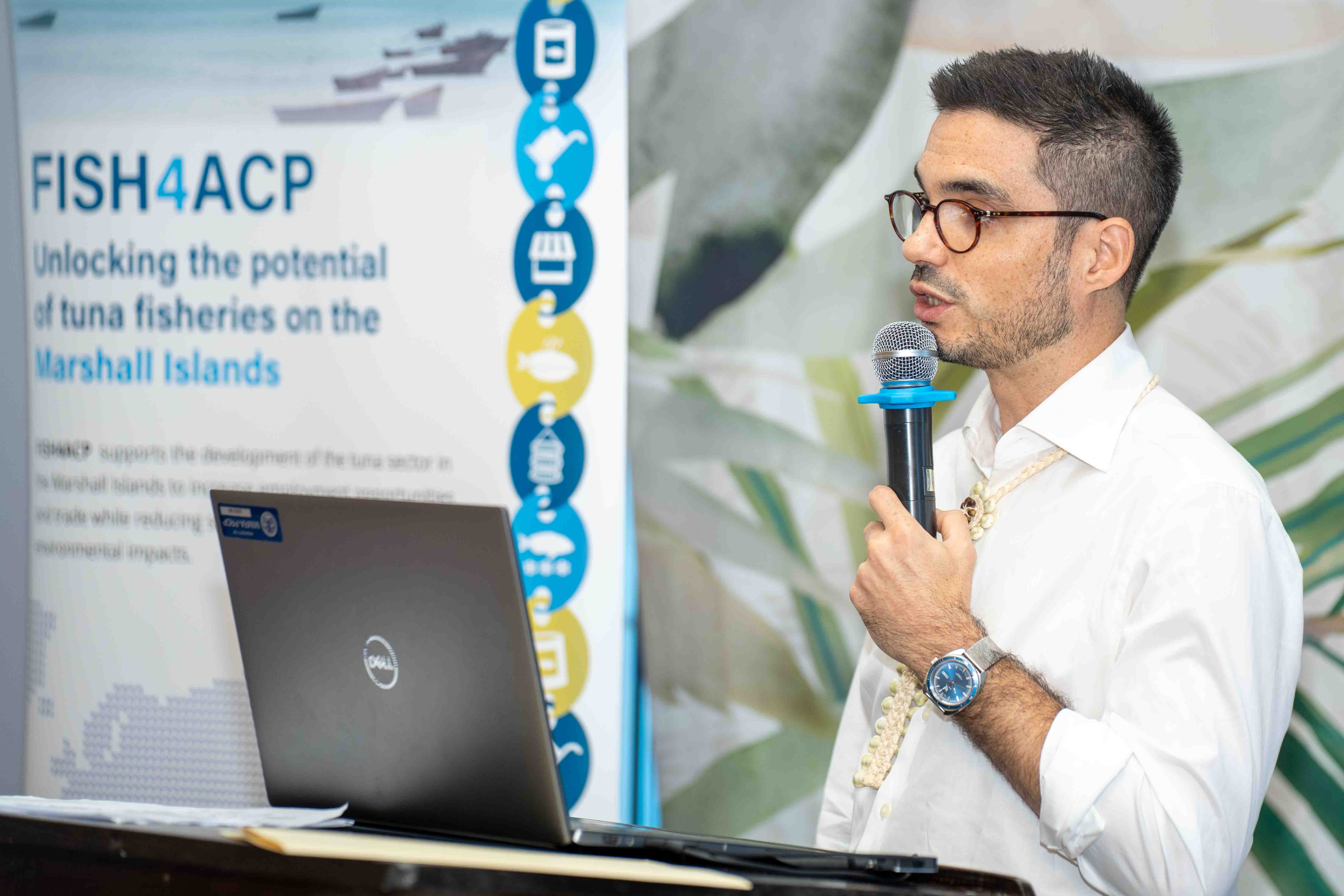
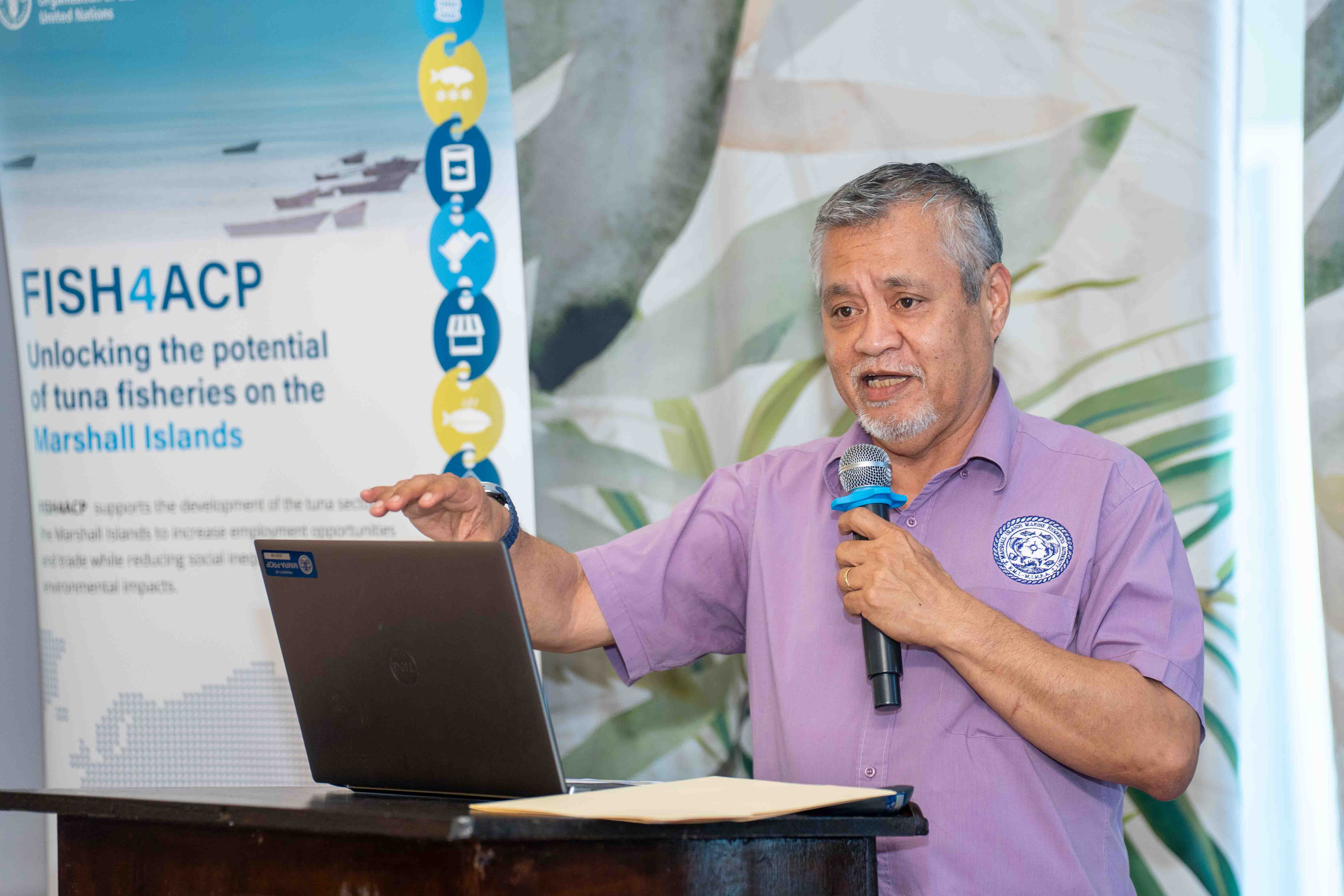
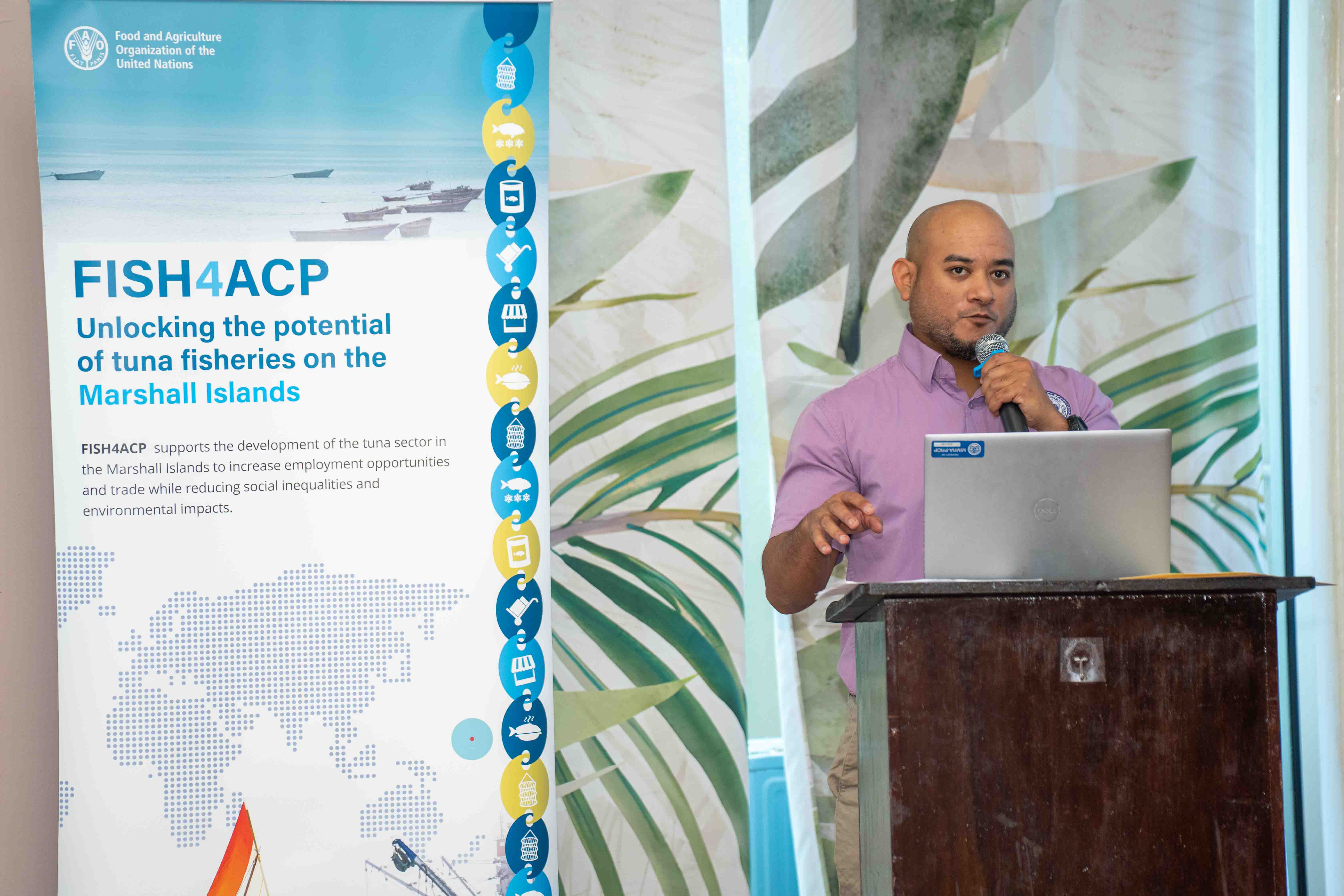
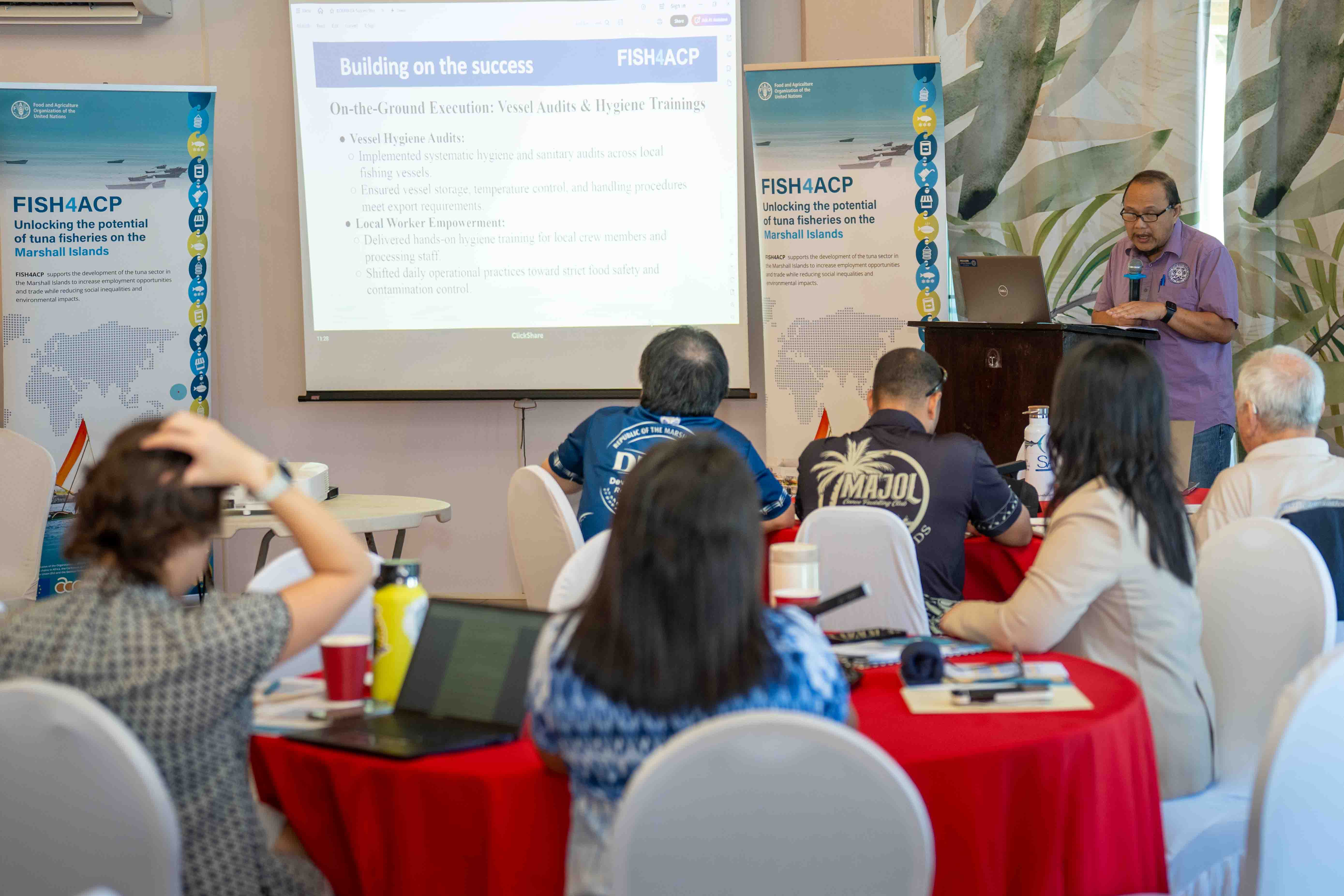
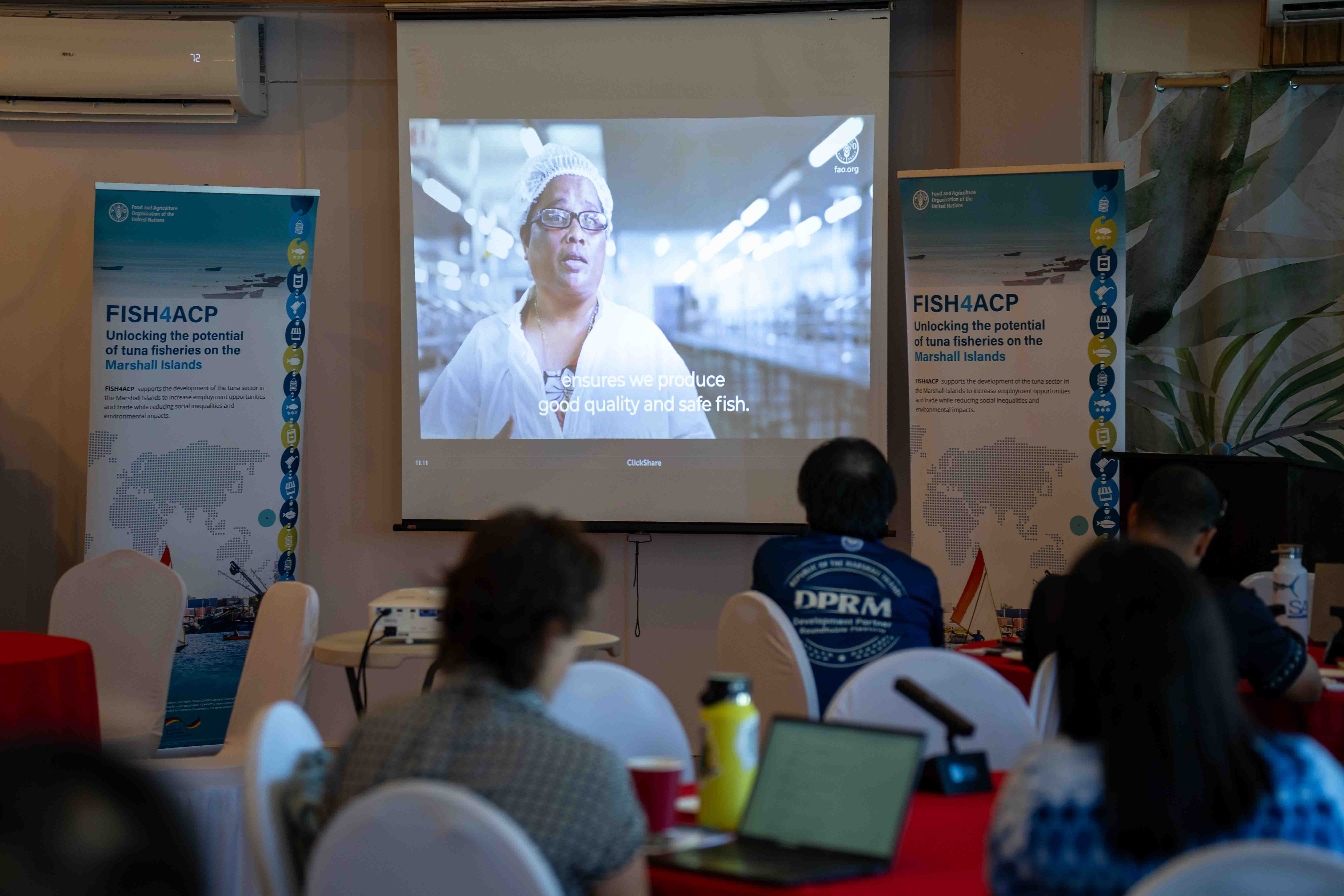
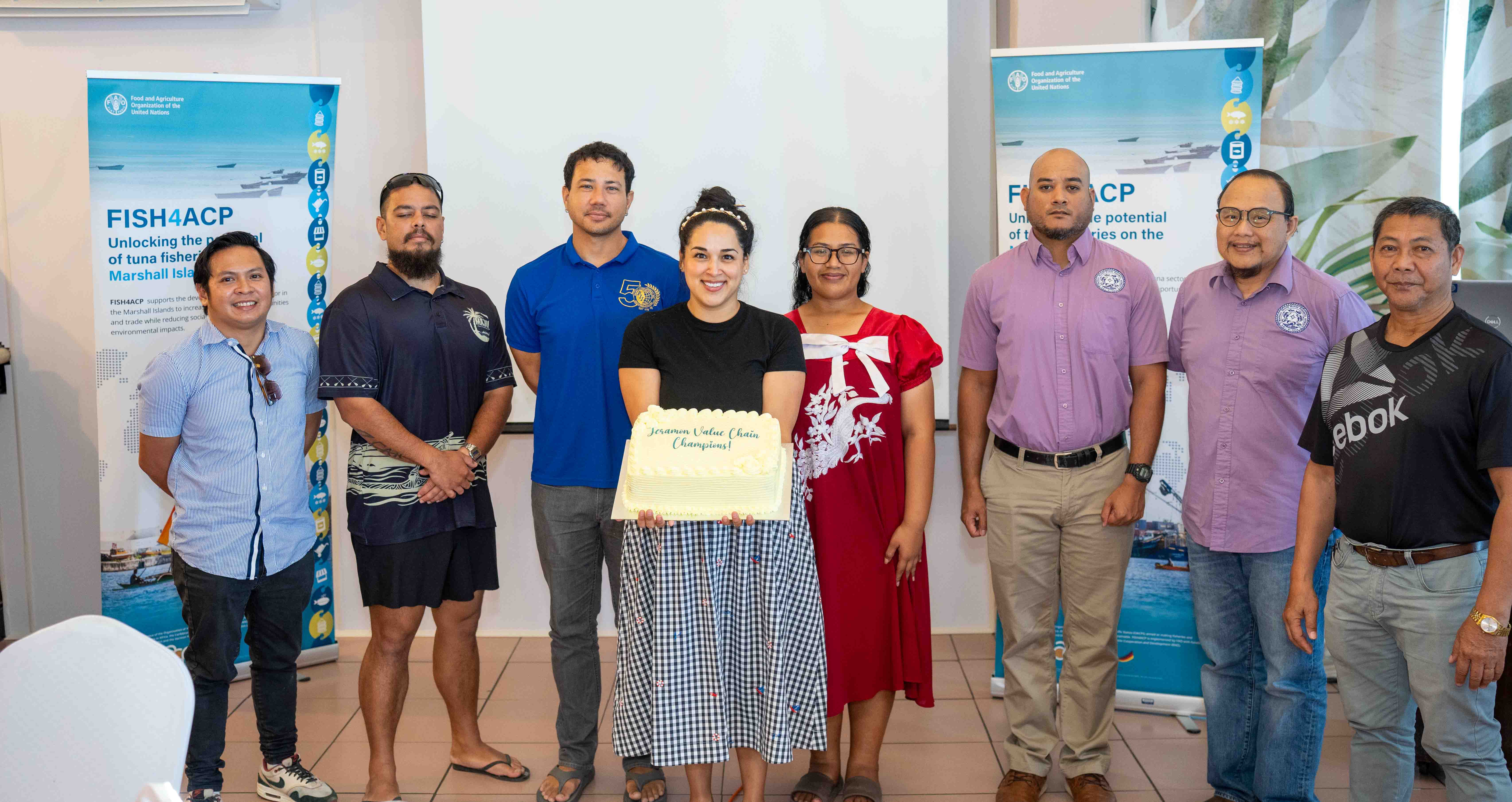
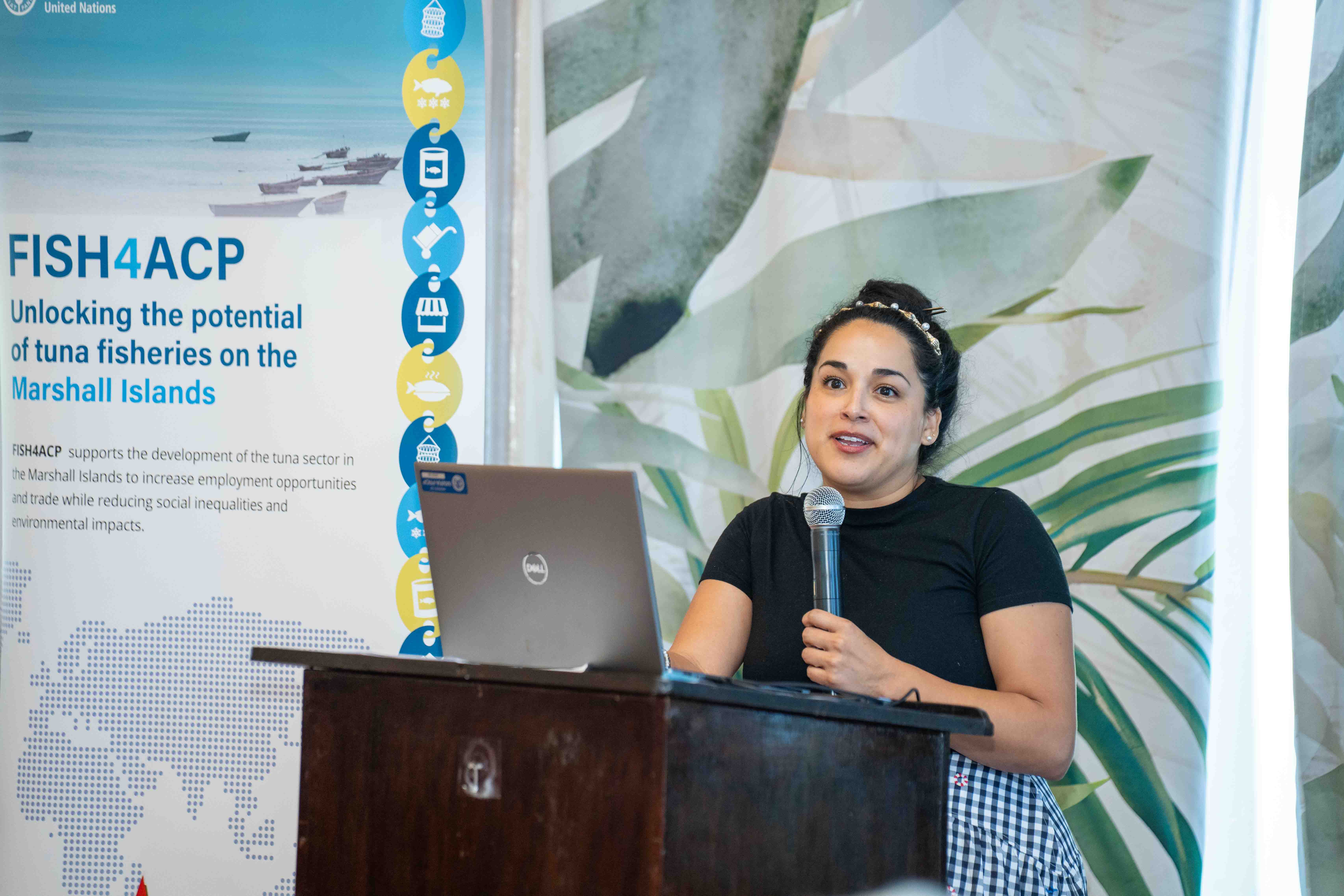
Majuro, 4 November 2026 – FISH4ACP has supported the Marshall Islands to mechanize tuna unloading, increase the skills and knowledge of its workers, strengthen gender safeguards, familiarize youth with job opportunities and set up a multi-stakeholder platform to carry forward the work of upgrading its tuna value chain.
Working with the Marshall Islands Marine Resources Authority (MIMRA) and tuna industry partners, the programme set out to strengthen the country as a hub for tuna landings and to make the value chain more sustainable.
“FISH4ACP has greatly helped the Marshall Islands increase its participation in the tuna value chain,” said Natural Resources and Commerce Minister Tony Muller, who chairs MIMRA, at an event to showcase the programme’s results. “We have seen the results in many areas that have accelerated our progress of tuna value chain expansion.”
Upgrading tuna infrastructure
One issue that the tuna sector has faced in the Marshall Islands is that most of the catch is transhipped in the port of Majuro rather than being landed. This means that the country misses out on many of the economic benefits it could get from the tuna. One of the programme’s aims was to ensure that more of the catch comes ashore and delivers more jobs and income.
Previously, workers unloaded tuna by hand, a laborious process that came with potential hygiene problems due to fish being exposed to the tropical heat for extended periods.
To address this issue, the programme introduced the Star Loader. It mechanizes unloading tuna from purse seiners and loading the fish into freezer containers at dockside. It more than doubled the speed of loading tuna into containers in the first year of operation.
Investing in people
FISH4ACP also made significant investments in people through trainings and outreach. More than 125 local workers participated in training on food safety, hygiene and the maintenance and repair of refrigerated shipping containers or reefers, raising standards in the domestic industry.
In addition, study trips to the Federated States of Micronesia and Seychelles were organized so that fisheries officials and industry representatives could learn from other countries.
The programme also included efforts to advance gender equality in an industry where women represent nearly 40 percent of the value chain workforce but are concentrated in lower-skilled processing jobs. Several local companies have since taken steps to improve working conditions for women.
FISH4ACP supported outreach activities to make the tuna sector more attractive to young people, including career fairs, student visits to processing facilities, and engagement with schools, the College of the Marshall Islands and the Life Skills Academy. The programme also raised the profile of fisheries careers through the media, community outreach and World Tuna Day activities, promoting job opportunities for young people and women.
“The concrete achievements of FISH4ACP in the tuna sector improved infrastructure and training in practical skills show what a difference the value chain approach can make,” said Beau Bigler, Chief Fisheries Officer, MIMRA.
Looking ahead
Participants at the legacy event also looked ahead, asking how the gains from the programme’s work can be sustained. Local tuna industry players, government officials and donor partners joined a roundtable discussion on future investment opportunities in the sector.
A legacy report produced by FISH4ACP sets out where to focus next. Its priorities include completing market-access requirements for the European Union and converting completed feasibility studies and audits into concrete investments. To take these priorities forward, a multi-stakeholder platform known as MI-FISH was set up in 2022 to track activities undertaken as part of FISH4ACP and to continue implementing the strategy after the programme wraps up its work at the end of this year.
“The European Union looks forward to seeing MI-FISH turn the success of the FISH4ACP project into sustainable growth in jobs and investment that will continue to benefit workers, women and young people for years to come,” Erik Lindebo, Team Leader, European Union Delegation to the Pacific.
About FISH4ACP
FISH4ACP is an initiative of the Organisation of African, Caribbean and Pacific States (OACPS) aimed at making fisheries and aquaculture value chains in Africa, the Caribbean and the Pacific more sustainable. FISH4ACP is implemented by FAO and partners, with funding from the European Union (EU) and the German Federal Ministry for Economic Cooperation and Development (BMZ).